Main Content

2026 Mid-America Environmental Engineering Conference

Event: Conference for graduate student research presentations and networking with researchers from other universities
Location: Missouri University of Science & Technology, Butler-Carlton Hall and Room 120, Rolla, Missouri
Date: Saturday October 24, 2026, 8:00AM-4:30PM (keynote at 9:00AM)
Keynote Speaker:

Dr. Joel Ducoste
2026 Kappe Distinguished Lecture - AAEES
Distinguished University Professor
North Carolina State University
"Hunting the FOG Whales: A Roadmap to Eliminating Sewer Fat Oils and Grease Deposits"

Registration and Abstract Submission: Register Here

  • Register by October 9, 2026 at 5:00 PM
  • Registration is free and includes breakfast and lunch
  • Oral and poster presentations are 15 minutes
  • Questions: Please contact Dr. Hunter Schroer

Mid-America Environmental Engineering Conference

Program - Saturday October 24, 2026
Butler Carlton Civil Engineering Hall - Room 120

8:00 a.m. Check-in
light breakfast & coffee available

9:00 a.m. Welcoming Remarks
Joel Burken

9:10 a.m. Keynote Address - Joel Ducoste
“Hunting the FOG  Whales: A Roadmap to Eliminating Sewer Fat Oils and Grease Deposits”

10:15 a.m. Break


Click or Scan for Abstracts

Session I: Brine & PFAS Management┃Moderated by Hunter Schroer┃10:30 a.m. - 12:00 p.m.

10:30 a.m.

Antiscalants impacts on Potassium Sulfate Nucleation from Reverse Osmosis Concentrate (ROC)

Gun Yi Park

WashU

10:45 a.m.

PFAS removal from reverse osmosis and nanofiltration brine by granular activated carbon: Thermodynamic insights into salinity effects

Jiefei Cao 

Mizzou

11:00 a.m.

Fabrication of nZVI/rGO via an Innovative Thermal Co-reduction Method for Enhanced PFAS Removal through Sequential Adsorption and Photocatalytic Degradation

Mehedi Al Sajib

SIUC

11:15 a.m.

Toward realistic assessment of PFAS adsorption on pine-derived cationic cellulose: molecular modeling and experimental evaluation 

Gema Díaz Bukvic 

Mizzou

11:30 a.m.

Discovering enzymatic pathways to break carbon-fluorine bonds in perfluorinated carboxylic acids 

Abiodun Idowu

S&T

11:45 - 1:30 p.m.
Lunch - Poster Session - Group Photograph

Session II: Sensing, Monitoring & Modeling┃Moderated by Amber Pete┃1:30 - 2:45 p.m.

1:30 p.m.

In-Situ Electrodeposition of Conductive Zn₃(HHTP)₂ on femtosecond Laser-Induced Graphene Electrodes for Chemiresistive CO Detection

Maryam Karimi 

S&T

1:45 p.m.

Photonic Molecularly Imprinted Polymer Sensor for Selective Detection of 11-Ketotestosterone in Aqueous and Biological Matrices

Tandra Biswas 

Mizzou

2:00 p.m.

Assessing point-of-use (POU) filter media extraction and analysis for monitoring organic contaminants in drinking water

Jean Brownell 

WashU

2:15 p.m.

Phytotoxicity of Conventional and Alternative Road Deicers on Illinois Bundleflower (Desmanthus illinoensis)

Kaylee Denbo 

S&T

2:30 p.m.

Real-time urban flood forecasting using a graph neural network surrogate trained on automated HEC-RAS 2D simulations

Muhammad Waqar Saleem 

Mizzou

2:45 p.m.

Break


Session III: Resource Recovery & Bioprocesses┃Moderated by Jianmin Wang┃3:00 - 4:00 p.m.

3:00 p.m.

Effects of Dissolved Wastewater Constituents on Oxygen Transfer

Raihan Khan Opu  

S&T

3:15 p.m.

Advancing Algae-AD integration and Biogas Upgrading Through Artificial Intelligence through a human-in-the-loop AI framework

Paloma Paiva Santiago 

WashU

3:30 p.m.

An Application of Extremophilic Algae Galderia sulphuraria for Acid Mine Drainage Treatment and Concurrent Biomass Production

Roshan Karki 

SIUC

3:45 p.m.

Integrated Strategy for Selective Cobalt Recovery and Carbon Mineralization: Reaction Mechanisms and Interfacial Phase Transformations

Xueyi Liu 

WashU

4:00 p.m.

Supercritical CO2 Reduces Impurities During Selective Rare Earth Recovery from Low-Grade Coals

Zixuan Xie 

WashU

4:15 p.m.
Information about ASCE EWRI St. Louis Chapter
Keara Trompen

4:25 p.m.
Closing Remarks and Best Presentation Award Announcements
Joel Burken
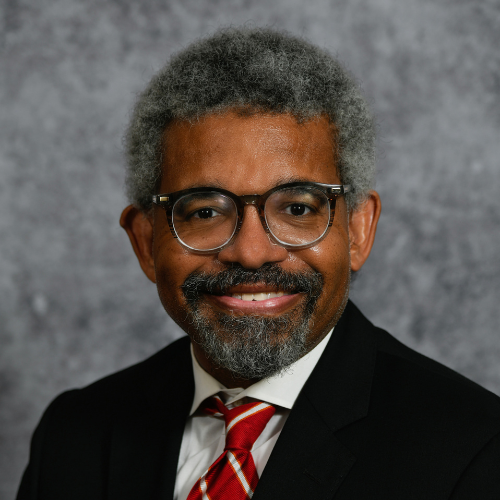
Dr. Joel Ducoste
2026 Kappe Distinguished Lecture - AAEES
Distinguished University Professor
North Carolina State University

Hunting the FOG Whales: A Roadmap to Eliminating Sewer Fat Oils and Grease Deposits

Abstract:

“Call me Ishmael.” In this lecture, I invite you aboard a subterranean voyage to hunt the most destructive monsters threatening modern urban infrastructure: “FOG Whales.” This presentation exposes how these giants (known as Fats Oils and Grease Deposits) form and how to eliminate them. Also known colloquially to the public in Europe as “fatbergs” such as London’s 130-tonne FOG deposit discovered in 2017 and its recent 100-tonne sibling found blocking Whitechapel sewers in December 2025, these massive FOG deposits can trigger sanitary sewer overflows (SSOs). 
Our journey begins by first identifying that these hardened FOG deposits are metallic salts formed via saponification reactions between free fatty acids and calcium ions.  Our expedition further explores how varying environmental conditions (specifically pH, temperature, and calcium solubility) help accelerate saponification kinetics, and how pipe construction materials dictate the attachment and structural integrity of these FOG solids. Traditional concrete pipes actively feed these beasts; calcium hydroxide leaching elevates surface pH, creating ideal  nucleation sites for strongly adhered FOG layers. To counter this, I will share how we introduce material-focused mitigation strategies, including High Volume Fly Ash (HVFA) concrete, which can significantly reduce calcium leaching and weaken FOG adhesion. Finally, I will unveil our ultimate navigational chart called the FOG Sewer Waste Management System (FOG-SWMS) to predict where these monsters may lurk. By modifying the source code to embed mass-action based mechanistic kinetics directly into the EPA Storm Water Management Model (SWMM) domain, FOG-SWMS is a scalable platform capable of simulating full-scale networks. This presentation will deliver a comprehensive overview of the pioneering science, engineered solutions, and scalable modeling frameworks developed over two decades to systematically reduce the occurrence of these FOG deposits. Ultimately, this lecture equips engineers and municipalities with the chemical, material, and predictive strategies (or harpoons) required to permanently rid our wastewater collection systems of FOG deposit Whales.

Bio:

Joel Ducoste, Ph.D., is a Professor in the Civil, Construction, and Environmental Engineering Department at North Carolina State University (NCSU) and Associate Dean for Faculty Development and Success. As the Associate Dean, Dr. Ducoste provides leadership in faculty reappointment, promotion and tenure, the post-tenure review process, workshop and coaching opportunities, and the recognition of awards to support faculty success in the different realms of faculty responsibilities.

Dr. Ducoste is a board-certified environmental engineering member with the American Academy of Environmental Engineers and Scientists and is a recognized expert in modeling water and wastewater treatment processes using Computational Fluid Dynamics (CFD). With over 200 peer reviewed publications and research reports, Dr. Ducoste current research interests include physico-chemical processes in water treatment, computational fluid dynamics modeling, water/wastewater process optimization, wastewater sewer collection system sustainability, renewable energy, plant biosystems engineering, solid waste process modeling, and disinfection of pathogenic aerosols.

Dr. Ducoste has received a number of awards including an NSF Career Award, a Fulbright fellowship, National Academy of Engineering Frontier of Engineering participant, Visiting Professorships at Ghent University, Southeast University, and Yangzhou University, NC State mentoring awards, elected Fellow of both the Water Environment Federation (WEF) and the Association of Environmental Engineering and Science Professors (AEESP), and received the WEF Fair Distinguished Engineering Educator Medal.

He has served on EPA Science Advisory Boards (2009-2018) and the EPA Board of Scientific Counselors Safe and Sustainable Water Resources committee (2018-2022). He was elected to serve on the Board of AEESP (2017-2020) and was also the 2020-2021 President of AEESP. He currently serves on the Board of Trustees for the American Academy of Environmental Engineers and Scientists. He received a BS and MS in Mechanical Engineering at Rensselaer Polytechnic Institute, Troy, NY, and a PhD in Environmental Engineering at University of Illinois, Urbana Champaign.

After 5 years in industry at CH2M Hill as a senior process engineer and as an advance-manufacturing engineer at GE Aircraft Engines he joined NC State.

Participating Universties

Missouri S&TUniversity of Missouri logosouthern illinois university edwardsvilleWashUSaint Louis UniversitySouthern Illinois Carbondale

Sponsors

Kummer Institute Center for Resource SustainabilityCivil, Architectural and Environmental Engineering Department - Missouri S&TEnvironmental & Water Resources Institute St. Louis ChapterOffice of the Vice Chancellor of Research and InnovationCollege of Engineering and Computing - Missouri S&T